
Our Location
304 North Cardinal St.
Dorchester Center, MA 02124

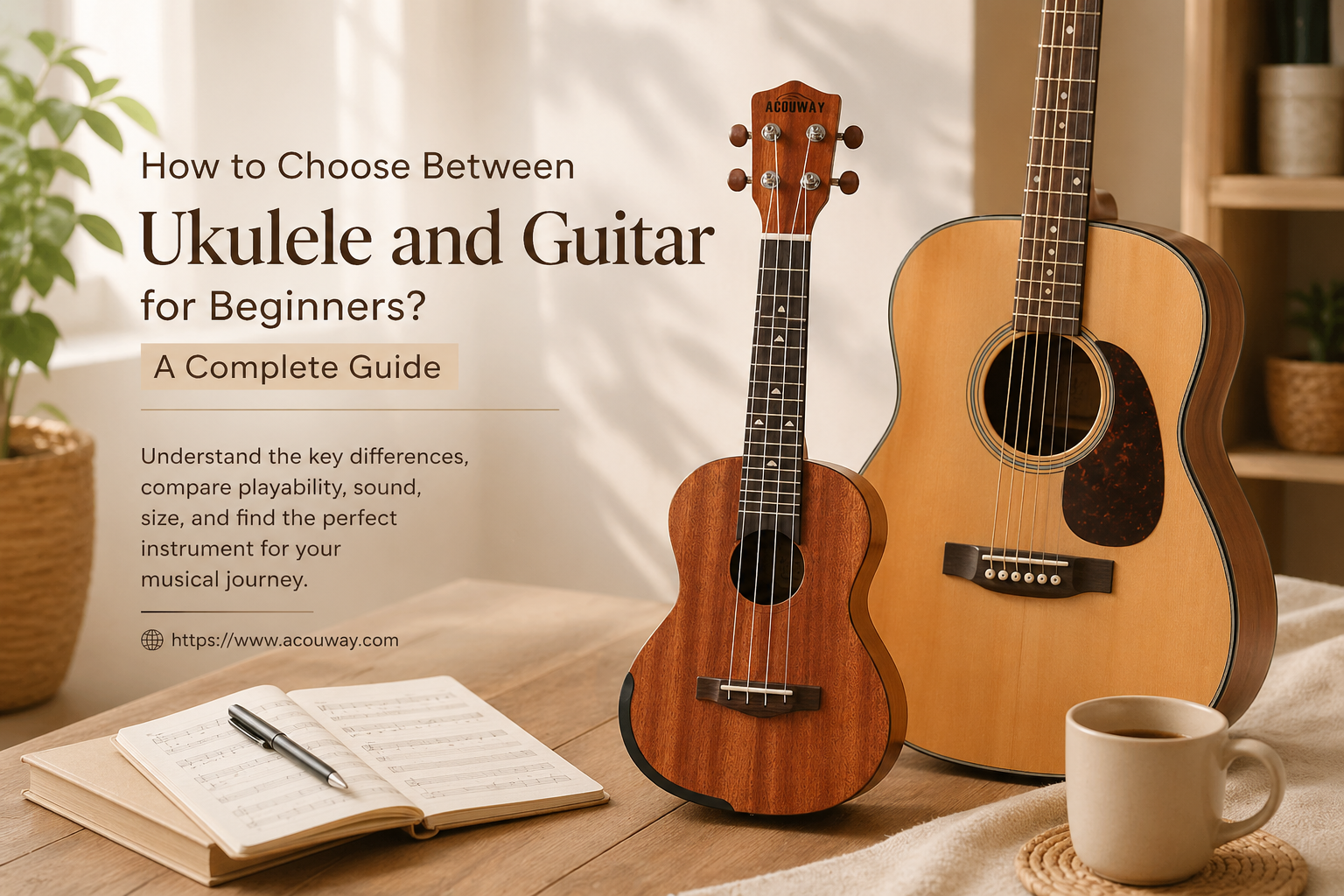
For many music enthusiasts who are new to playing instruments, the biggest confusion is often choosing between a ukulele and a guitar. Both instruments are popular for their portability and versatility, but they differ significantly in terms of difficulty, sound, and suitability for beginners. This guide will help you make the right choice based on your goals, budget, and learning preferences, with practical tips to get you started quickly.
Understanding the core differences between these two instruments is the first step to making an informed decision. Below is a detailed comparison to help you distinguish their advantages and disadvantages, especially for those who have no prior musical experience.
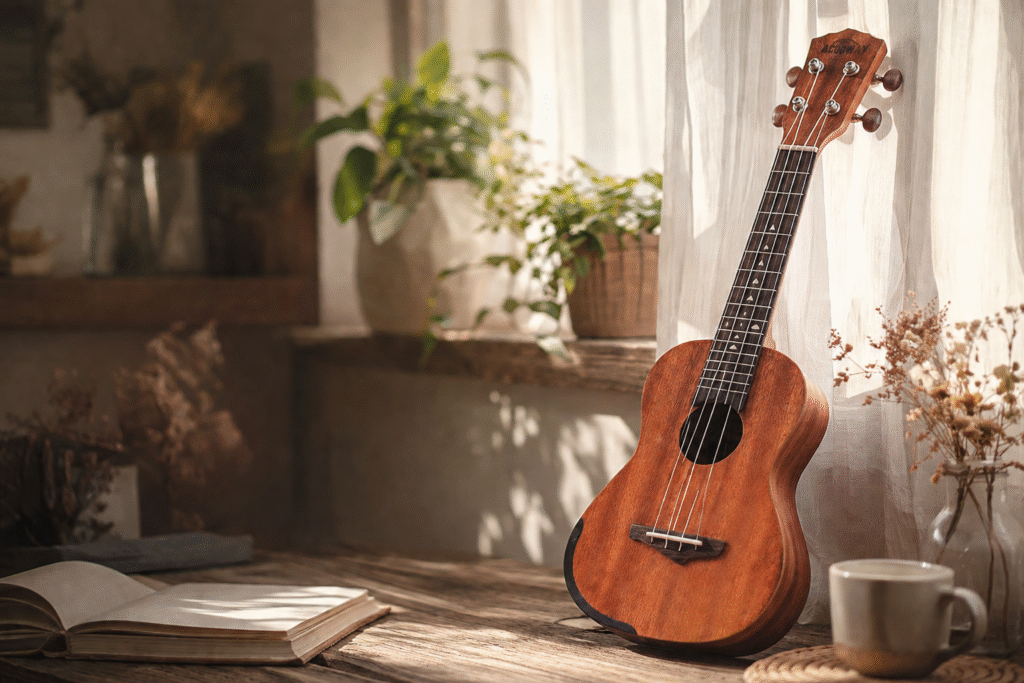
The ukulele typically has 4 nylon strings, which are softer and easier to press down. Even beginners with sensitive fingers won’t feel too much pain, and most people can learn simple chords and play basic songs within 1-3 days. On the other hand, the guitar usually uses steel strings, which are harder and require more pressure to press. Beginners often experience sore fingers in the first week, which may affect their learning motivation.
Ukuleles are smaller and lighter (usually 20-30cm in length), making them easy to carry in a backpack, suitable for playing at home, outdoors, or during travel. Guitars, especially acoustic ones, are larger and heavier, which is less convenient for daily carrying, but they offer a richer sound range.
Ukuleles have a bright, cheerful, and healing sound, perfect for pop, folk, and light music. Guitars have a fuller, deeper sound with more layers, suitable for pop, rock, fingerstyle, and various music genres, making them more versatile for different playing styles.
Entry-level ukuleles are more affordable, with high-quality basic models available at a reasonable price, making them ideal for beginners to try without a large investment. Entry-level acoustic guitars have a wider price range, and low-priced models may have issues like poor string action or buzzing, which can affect the playing experience.
The ukulele is perfect for you if you fall into any of the following categories:
The guitar is a better choice if you meet these conditions:
No matter which instrument you choose, the following tips will help you learn faster and avoid common mistakes:
If you just want to try playing an instrument for fun, relieve stress, or play simple songs with friends, the ukulele is your best choice—it’s easy to learn, portable, and affordable. If you have a deep love for music, want to learn more playing skills, and are willing to put in long-term practice, the guitar will bring you a richer musical experience.
Remember, the key to learning an instrument is persistence. Choosing the right instrument that suits you will make your musical journey much smoother. Happy playing!
